
Why Concrete Protection Decisions Made Today Still Matter in 100 Years
The protection system specified during design stage can determine the maintenance burden, operational reliability and rehabilitation costs of an infrastructure asset for the next 50 to 100 years.
Getting it right early is significantly cheaper than managing the consequences of premature failure later.
Across wastewater, drainage, transport and underground infrastructure, concrete structures are exposed to aggressive conditions from the day they are commissioned. Chemical attack, abrasion, groundwater pressure and moisture ingress all contribute to long-term degradation if assets are not properly protected.
Too often, protection systems are selected based on short-term installation cost rather than lifecycle performance.
The result is recurring maintenance, recoating programs, operational disruption and costly rehabilitation works decades earlier than expected.
Designing for Lifecycle Performance
At Engineered Concrete Protection, we work with asset owners, engineers and contractors from early project design through to installation and delivery.
Our role is not simply to supply a product.
We help project teams:
identify the right protection system for the operating environment
detail systems correctly for long term performance
reduce future maintenance risk
avoid common failure mechanisms
deliver predictable asset lifecycle outcomes
This engineering first approach ensures infrastructure is designed to perform under the real conditions it will face, not just meet minimum compliance requirements on paper.
HDPE AKS Lining Systems for New & Existing Infrastructure
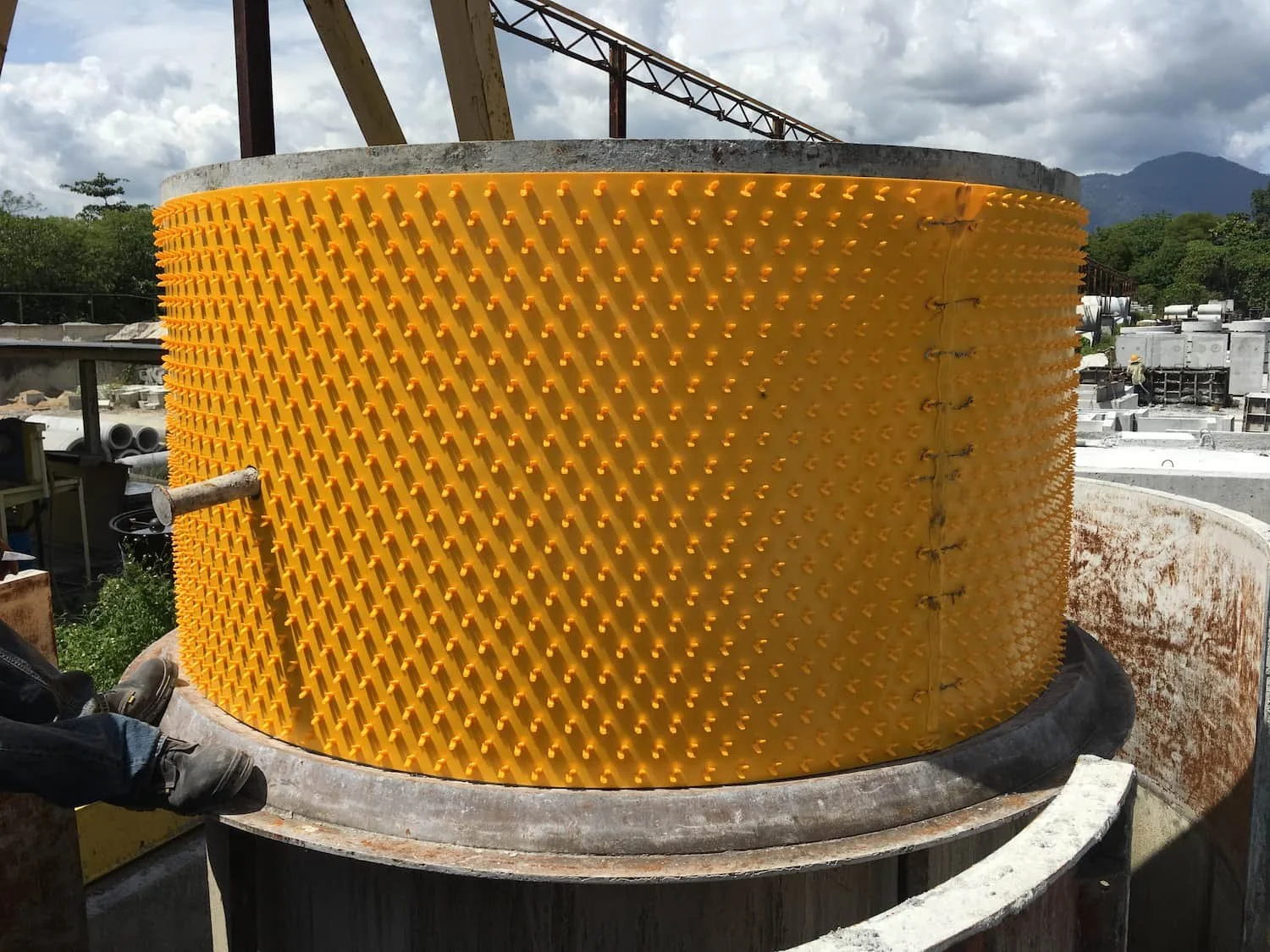
Mechanically anchored HDPE AKS lining systems provide long-term concrete protection for both new construction and rehabilitation projects.
Unlike traditional coatings that rely solely on adhesion, HDPE anchor knob systems become mechanically integrated into the concrete structure itself. The result is a durable, chemically resistant protective barrier engineered for aggressive infrastructure environments.
These systems are commonly used across:
Water and wastewater infrastructure
Sewer tunnels and pipelines
Pump stations and manholes
Wastewater treatment plants
Drainage structures
Transport infrastructure
Mining and industrial processing assets
Chemical containment structures
HDPE lining systems can be cast directly into new concrete structures or retrofitted to existing assets requiring rehabilitation and lifecycle extension.
Infrastructure Protection Is a Long Term Investment
For councils, utilities, contractors and infrastructure owners, the real cost of concrete protection is rarely the initial installation.
The true cost comes from:
unplanned maintenance
recoating cycles
asset downtime
operational disruption
structural deterioration
premature rehabilitation
Infrastructure designed for long-term performance delivers lower whole of life cost, greater reliability and reduced long term risk.
That is why concrete protection should never be treated as an afterthought.
Discuss Your Project
Whether you are planning a new infrastructure project or managing an existing asset showing signs of degradation, Engineered Concrete Protection can help identify the right long-term solution for your environment and design requirements.
info@engineeredconcreteprotection.com.au