
Why Traditional Concrete Coatings Fail in Wastewater Infrastructure
Concrete infrastructure in wastewater environments faces constant attack from moisture, chemicals, gases, abrasion and groundwater pressure. While traditional coatings are commonly used to protect these assets, many systems fail long before the intended asset design life.
The reason is simple: coatings rely on adhesion.
In aggressive sewer and wastewater environments, hydrostatic pressure, vapour transmission and ongoing chemical exposure continuously work against the bond between the coating and the concrete substrate. Over time, this can lead to blistering, cracking, delamination and premature failure.
For critical infrastructure assets, repeated recoating cycles create significant maintenance costs, operational disruption and long-term lifecycle risk.
A Different Approach to Concrete Protection
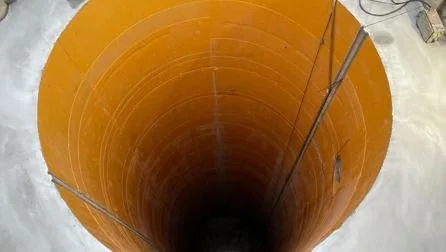
Mechanically anchored HDPE lining systems operate on an entirely different principle. Rather than relying solely on surface adhesion, HDPE anchor knob liners are permanently integrated into the concrete structure itself. Thousands of integral anchors are either:
Cast directly into new concrete structures, or
Encapsulated within grout during rehabilitation and retrofit applications.
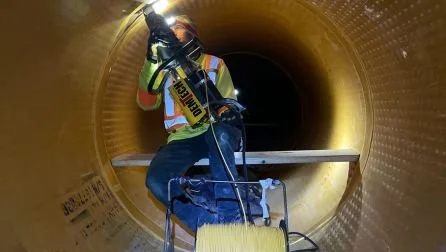
All joints are extrusion welded to form a continuous, watertight and chemically resistant protective barrier. The result is a homogenous lining system designed for long-term durability in highly aggressive environments.
Why HDPE Lining Systems Outperform Traditional Coatings
Resistance to Hydrostatic Pressure: Traditional coatings can fail when groundwater pressure builds behind the lining system. Mechanically anchored HDPE liners allow controlled pressure dissipation while remaining permanently fixed to the structure.
Crack Bridging Capability: Concrete structures naturally move and crack over time. HDPE lining systems remain flexible and can bridge live cracks without tearing or losing protection.
No Concrete Curing Delays: Unlike many applied coating systems, HDPE liners can be installed on damp substrates and do not require extended concrete curing periods before installation. This can significantly reduce project timelines during rehabilitation works.
Chemically Inert Protection: HDPE is highly resistant to acids, sulphates, wastewater by-products and aggressive chemical environments that commonly degrade traditional concrete coatings.
Consistent, Tested Performance: Factory-manufactured sheet thickness and welded seams reduce the risk of pinholes, uneven application, curing defects and missed areas commonly associated with spray-applied systems.
Applications for Mechanically Anchored HDPE Systems
HDPE concrete protection lining systems are commonly used across:
Sewer tunnels and trunk mains
Pump stations and manholes
Wastewater treatment plants
Drainage and stormwater infrastructure
Chemical containment structures
Marine and aggressive ground environments
Industrial processing infrastructure
These systems are suitable for both new infrastructure projects and rehabilitation of existing assets.
Designing for Lifecycle Performance
Infrastructure owners are increasingly shifting focus from short term installation costs to whole-of-life asset performance.
Mechanically anchored HDPE lining systems are engineered for service lives exceeding 100 years, dramatically reducing maintenance requirements, recoating cycles and long-term operational risk.
For critical civil and water infrastructure, long-term protection is no longer just a maintenance consideration, it’s a lifecycle strategy.
Discuss Your Project
Engineered Concrete Protection provides engineered HDPE lining systems for Australia’s most demanding infrastructure environments.
Whether you are designing new infrastructure or rehabilitating ageing assets, our team can help deliver long-term concrete protection solutions built for lifecycle performance.
Enquire with at info@engineeredconcreteprotection.com.au